Introducing kids to famous paintings does not have to feel like a museum lecture. Every great painting has a story, a surprising detail or a technique kids can try at home. Here are 12 masterpieces that kids ages 5 to 12 love, with a fun fact and a simple art idea for each one.
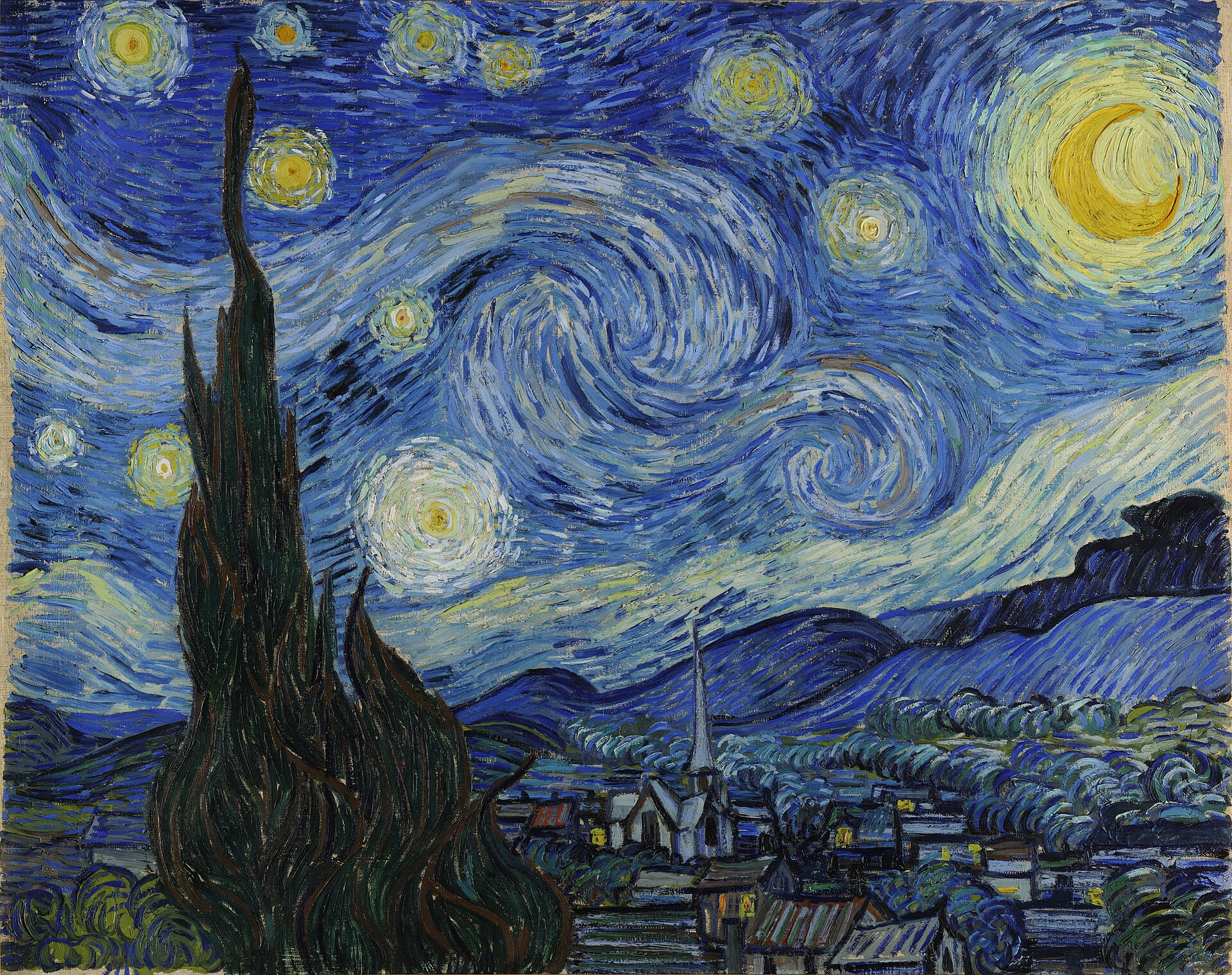
1. The Starry Night by Vincent van Gogh (1889)
Where it is: The Museum of Modern Art, New York.
Fun fact: Van Gogh painted the swirling sky from memory, based on the view from his window at Saint-Rémy in France.
Try this: Paint a night sky over a place you love using thick, swirly brushstrokes. Read our full Starry Night art project for kids.
2. Mona Lisa by Leonardo da Vinci (about 1503 to 1519)
Where it is: The Louvre, Paris.
Fun fact: Leonardo used soft, smoky shading called sfumato, which is part of why her smile seems to change as you look at it.
Try this: Paint a portrait of someone in your family and try blending the shadows so there are no hard lines.
3. Sunflowers by Vincent van Gogh (1888)
Where it is: One famous version hangs in the National Gallery, London.
Fun fact: Van Gogh painted sunflowers to decorate the room of his friend, the artist Paul Gauguin.
Try this: Paint a vase of your favorite flowers using only shades of one color.
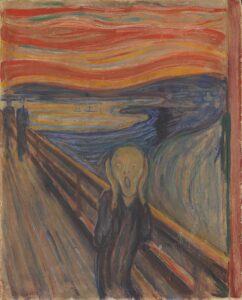
4. The Scream by Edvard Munch (1893)
Where it is: The National Museum, Oslo, Norway.
Fun fact: Munch made several versions of The Scream, including paintings, pastels and prints.
Try this: Paint a feeling instead of a thing. What color is excited? What shape is worried?
5. Water Lilies by Claude Monet (1897 to 1926)
Where it is: Many museums, including The Metropolitan Museum of Art and the Musée de l’Orangerie in Paris.
Fun fact: Monet painted about 250 versions of the water lilies in his own garden pond in Giverny.
Try this: Paint the same outdoor spot in the morning and again in the afternoon and compare the colors.
6. The Dance by Henri Matisse (1910)
Where it is: The Hermitage Museum, Saint Petersburg.
Fun fact: Matisse used only three main colors: red, green and blue.
Try this: Paint people moving using just three colors and simple, flowing shapes.
7. The Night Watch by Rembrandt van Rijn (1642)
Where it is: The Rijksmuseum, Amsterdam.
Fun fact: It is huge, about 12 feet tall and nearly 15 feet wide, and it is not actually set at night. Old varnish made it look darker over time.
Try this: Paint a group picture where one person is in a spotlight and the rest fade into shadow.
8. Composition VIII by Wassily Kandinsky (1923)
Where it is: The Solomon R. Guggenheim Museum, New York.
Fun fact: Kandinsky believed colors and shapes could feel like music.
Try this: Put on a favorite song and paint the shapes and colors it makes you imagine.
9. The Harvesters by Pieter Bruegel the Elder (1565)
Where it is: The Metropolitan Museum of Art, New York.
Fun fact: Look closely and you will find people eating lunch, napping under a tree and carrying bundles of wheat.
Try this: Paint a busy scene from your own day and hide small details for others to find.
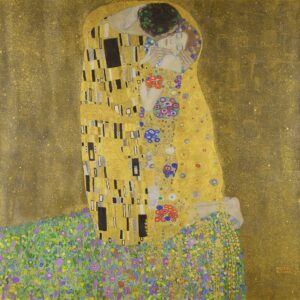
10. The Kiss by Gustav Klimt (1907 to 1908)
Where it is: The Belvedere, Vienna.
Fun fact: Klimt used real gold leaf, which is why the painting shimmers.
Try this: Make a sparkly picture of people you care about, filled with patterns.
11. A Sunday Afternoon on the Island of La Grande Jatte by Georges Seurat (1884 to 1886)
Where it is: The Art Institute of Chicago.
Fun fact: The whole painting is made of tiny dots of color, a technique called pointillism.
Try this: Paint a park scene using only dots. A cotton swab works great.
12. The Birth of Venus by William-Adolphe Bouguereau (1879)
Where it is: The Musée d’Orsay, Paris.
Fun fact: It retells a story from Greek and Roman mythology, and Bouguereau was famous for his smooth, soft blending.
Try this: Paint a character from a favorite story or myth and blend the colors softly.
How to Teach Famous Paintings to Kids
- Start with looking. Ask what they notice first, what colors they see and how the painting makes them feel.
- Tell the story. Kids remember a painting when they know something surprising about the artist.
- Make, do not copy. Borrow one idea, like Seurat’s dots or Matisse’s three colors, and let kids create their own picture.
- Display their work. Hang it next to a print of the original.
Make It a Monthly Habit
The Art Club Monthly Kids Box does all of this for you. Every month brings a new masterpiece, washable paints, an 8×10 canvas, a kid friendly art history pamphlet and an open ended creative prompt. It is a favorite with homeschool families, and new members get 50% off the first box with code 50ACM26.
Frequently Asked Questions
What famous paintings should kids learn about?
Great starter paintings include The Starry Night, Mona Lisa, Sunflowers, The Scream, Water Lilies and A Sunday Afternoon on the Island of La Grande Jatte. Each has a memorable story and a technique kids can try.
At what age can kids learn art history?
Kids as young as 5 enjoy art history when it is told as a story and paired with a hands on project.
How do I teach art history at home?
Pick one painting a month, share a few fun facts, look at it together and then make something inspired by it. Our guide to teaching art history at home has a simple monthly plan.