Few materials make a painting glow like gold leaf. It catches the light, shifts as you move around it and instantly makes a piece feel precious. It also has a reputation for being fussy. The good news: once you understand a few basics, gold leaf is surprisingly beginner friendly. Here is what you need to know before you try it.
What Is Gold Leaf?
Gold leaf is metal that has been hammered into incredibly thin sheets, so thin that a single sheet will crumple if you breathe on it. Artists apply it to paintings, frames, lettering and sculpture to add shimmer and a sense of value. It has been used for centuries, from medieval altarpieces to Byzantine mosaics to modern mixed media art.
Real Gold Leaf vs Imitation Gold Leaf
- Genuine gold leaf is made from real gold. It never tarnishes, but it is expensive and extremely delicate.
- Imitation gold leaf (often called composition leaf or Dutch metal) is usually a copper and zinc alloy. It is thicker, easier to handle and far more affordable, which makes it the best choice for practice and most hobby projects. It can tarnish over time, so it should be sealed.
If you are just starting out, imitation leaf is the way to go. You can focus on learning the technique without worrying about cost.
What You Need
- Leaf sheets, real or imitation
- Size, the special adhesive used for gilding. Water based size is the easiest for beginners because it dries to a tacky state quickly.
- A soft, dry brush for pressing the leaf down and brushing away the excess
- A sealer or varnish to protect imitation leaf from tarnishing
- A dry painted surface, such as a finished acrylic or fully dry oil layer
How to Apply Gold Leaf
1. Paint on the size
Brush a thin, even layer of size only where you want gold to stick. The leaf will grab onto every bit of adhesive, so keep your edges clean.
2. Wait until it is tacky
This is the most important part. Size needs to go from wet and milky to clear and tacky, like the back of a sticker. Check the label for timing. Applying leaf too early is the most common beginner mistake.
3. Lay the leaf
Lift a sheet with its backing paper and lay it gently over the tacky area. Do not rub. Just let it settle.
4. Press and burnish
Tap the leaf down with a soft, dry brush, then sweep lightly to remove the loose flakes (gilders call these skewings). Cracks and small gaps are part of the charm, and you can patch them with leftover flakes.
5. Seal it
Once everything is dry, seal imitation leaf with a clear varnish so it stays bright.
How Klimt Used Gold in The Kiss
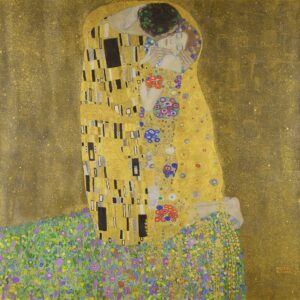
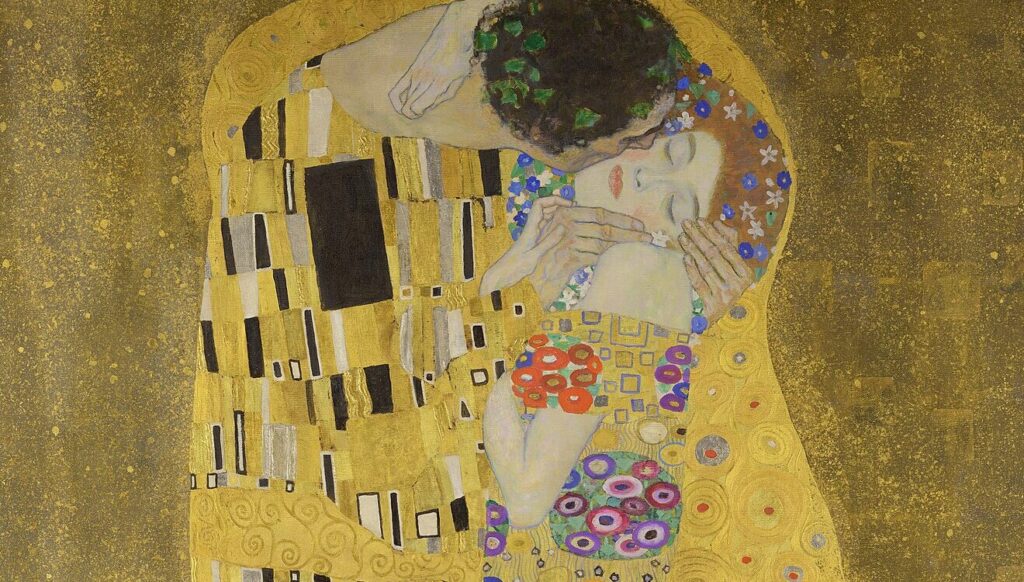
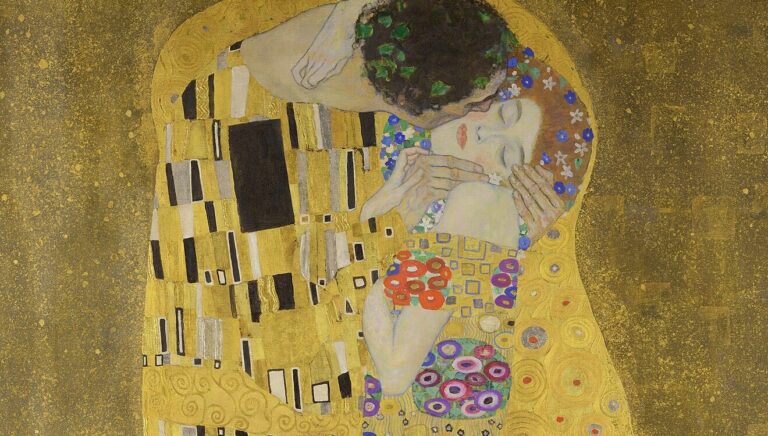
Gustav Klimt is the artist most people think of when they hear “gold leaf painting.” In The Kiss (1907 to 1908), he combined oil paint with layers of applied gold leaf, building glittering robes covered in patterns: bold rectangles for the man and soft circles and flowers for the woman. Klimt’s father was a gold engraver, and Klimt was deeply inspired by the shimmering Byzantine mosaics he saw in Ravenna, Italy. The painting now hangs at the Belvedere museum in Vienna.
What makes Klimt so useful for artists today is that he did not use gold everywhere. He placed it next to flat color and soft, realistic skin, so the gold reads as a contrast rather than a decoration. That is a great lesson for your own work: let the gold be the star in just a few places.
Beginner Tips
- Practice on a small canvas or paper before a big piece.
- Work away from drafts, fans and open windows.
- Use a dry brush and dry hands. Moisture makes leaf stick where you do not want it.
- Pair gold with dark or deep colors (black, deep green, burgundy) for maximum contrast.
- Try patterns: spirals, rectangles and dots look striking in gold.
Create With Us
Our November box is inspired by Klimt’s The Kiss. The Teens & Adults Box includes real gold leaf sheets and adhesive alongside professional oil paints, and the Kids Box swaps in gold glitter glue for safe, sparkly fun. Each box comes with an open creative challenge, not a tutorial, so your piece will be entirely your own. Order by October 15 to get the November box.
- Kids Box (ages 5 to 12): washable paints, a canvas and a kid friendly art history pamphlet. First box $19.50.
- Teens & Adults Box (13+): professional oil paints, a specialty medium and an in depth art history guide. First box $24.50.
Every box ships free in the US, and you can cancel anytime. See what’s coming on the content calendar.
Frequently Asked Questions
Is gold leaf hard for beginners?
No. With imitation leaf and a water based size, most beginners get good results on the first try. The key is waiting until the size is tacky before laying the leaf.
What is the difference between real and imitation gold leaf?
Real gold leaf is made of gold and never tarnishes, but it is costly and very delicate. Imitation leaf, also called composition leaf, is usually a copper and zinc alloy that is easier to handle and should be sealed to prevent tarnishing.
Can you put gold leaf on an oil painting?
Yes. Apply it to a fully dry paint layer using gilding size, then seal it. Gustav Klimt combined oil paint and gold leaf in The Kiss.
Does gold leaf need to be sealed?
Imitation gold leaf should be sealed with a clear varnish to prevent tarnishing. Genuine gold leaf does not tarnish, though a sealer can protect it from handling.